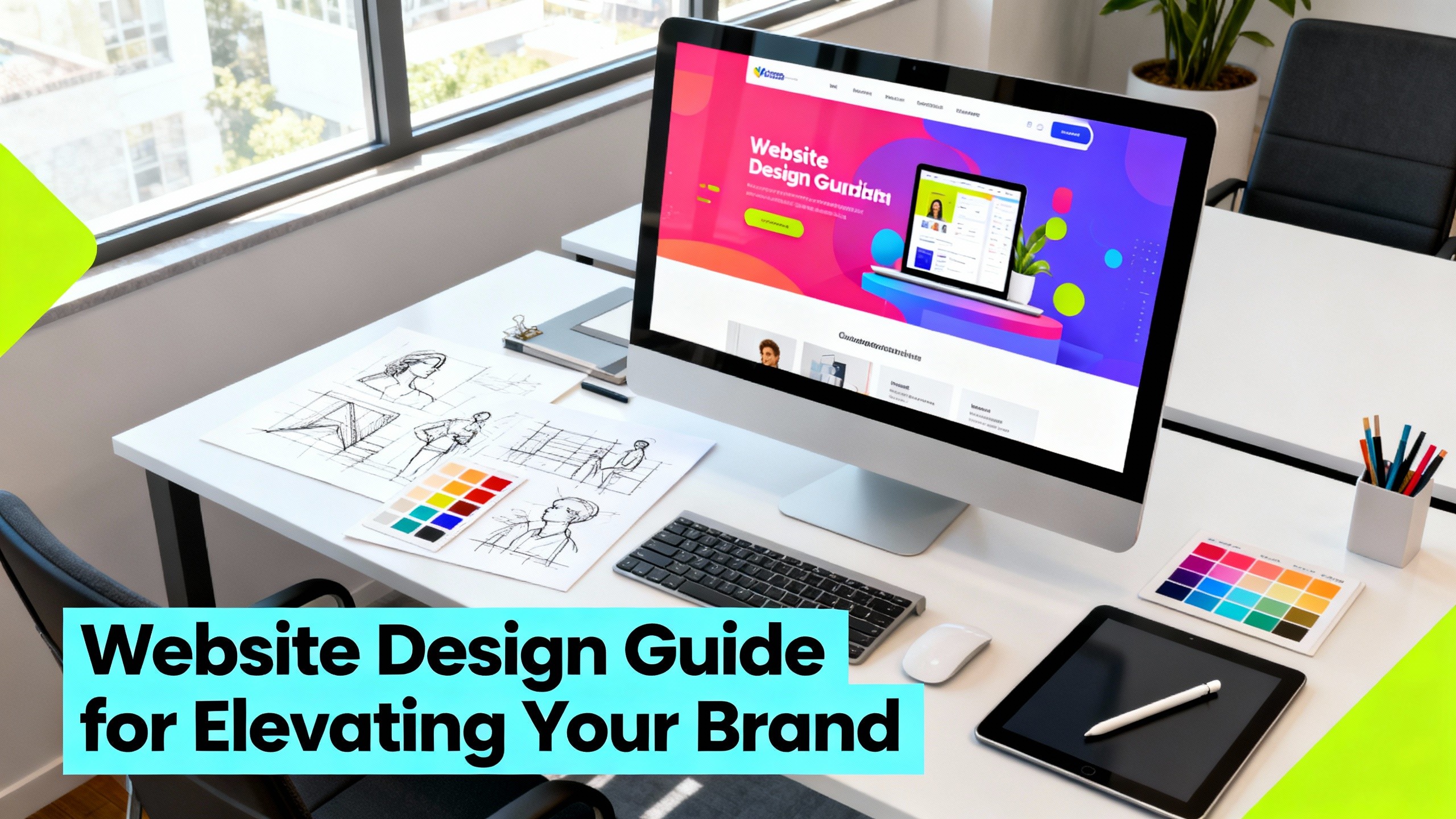
Website Design Guide for Elevating Your Brand
The Quick Answer

When it comes to website design, the primary goal is to create a digital space that reflects your brand identity while ensuring an intuitive user experience. This involves balancing aesthetics with functionality to captivate and retain visitors. Whether you're a small business owner or a marketing director, a well-designed website can significantly elevate your brand's presence.
Key components of effective website design include:
Responsive Design: Ensures your website looks great on all devices, from desktops to mobile phones.
User-Friendly Navigation: Simplifies the user's journey, making information easy to find.
Brand Consistency: Incorporates your brand’s colors, fonts, and imagery to create a cohesive look.
Fast Load Times: Reduces bounce rates by ensuring pages load quickly, keeping users engaged.
Strong Calls to Action (CTAs): Guides visitors toward desired actions, like making a purchase or signing up for a newsletter.
Next, consider the visual hierarchy of your site. This involves arranging elements to show their importance, using size, color, and position. For example, a bold headline at the top of the page will attract more attention than smaller text at the bottom.
Another critical factor is content quality. Engaging, relevant content not only enhances user experience but also improves SEO, making it easier for potential customers to find you. Remember, content is king, and combining it with strategic design can make your website a powerful marketing tool.
Feature | Importance | Impact on Users |
|---|---|---|
Responsive Design | High | Accessibility |
Fast Load Times | High | User Engagement |
Brand Consistency | Medium | Trust and Loyalty |
In summary, effective website design is about creating a seamless, engaging, and brand-consistent experience. By focusing on these elements, you can transform your website into a potent asset for your business.
Background & Context
In today's digital landscape, website design plays a crucial role in defining a brand's identity and success. As businesses increasingly pivot towards online platforms, the demand for compelling and functional website designs has surged. At TrendTap Digital, we understand that a well-designed website is more than just an online presence—it's a strategic asset that can elevate your brand above the competition.
The Role of Website Design
Website design is not merely about aesthetics; it's about creating an environment that reflects your brand's values and mission. For small business owners and marketing directors, a website is often the first touchpoint for potential customers. It needs to convey trust and professionalism while engaging users with a seamless experience.
Key elements of effective website design include:
User Experience (UX): A positive UX ensures that visitors can navigate your site effortlessly, find information quickly, and leave with a favorable impression.
Visual Appeal: The use of color schemes, typography, and imagery should align with your brand's identity, creating a cohesive and memorable look.
Functionality: Websites must be responsive, load quickly, and function flawlessly across all devices.
Importance for Various Audiences
For e-commerce brands, the website is the primary sales channel. A design that simplifies the purchasing process can significantly increase conversion rates. Startup founders often need to convey innovation and trust through their website, making design a critical component of their branding strategy.
Content creators and digital advertisers also rely on well-designed websites to showcase their portfolios and attract collaborations. For these audiences, the ability to customize and update content easily is paramount.
"A website is not just a digital storefront; it's an extension of your brand's voice and vision." — Web Design Expert
Competitive Landscape
TrendTap Digital faces competition from agencies like Isadora Digital Agency and Digital Silk. These competitors also focus on unique design elements and data-driven strategies. However, TrendTap's strength lies in our ability to craft unique brand identities through comprehensive marketing solutions.
Competitor | Strengths | Differentiator |
|---|---|---|
Isadora Digital Agency | Innovative UX/UI Design | Award-winning designs |
Digital Silk | Data-driven strategies | Comprehensive digital services |
TrendTap Digital | Brand identity crafting | Full-service marketing approach |
Conclusion
In conclusion, understanding the background and context of website design is crucial for any business aiming to thrive online. By focusing on user experience, visual appeal, and functionality, businesses can create websites that not only attract but also retain customers. At TrendTap Digital, we specialize in transforming these elements into a cohesive strategy that elevates your brand and drives success.
Core Concepts
Key Concept 1: User-Centric Design
In the world of website design, the user should always be at the forefront. A user-centric approach ensures that every element of your website is crafted with the end-user in mind. This concept is not just about aesthetics; it's about creating an intuitive and engaging experience that meets the needs and expectations of your audience.
Understanding User Needs
To truly embrace user-centric design, one must first understand the target audience. This involves:
Conducting thorough user research to gather insights into user behavior and preferences.
Creating user personas to represent different segments of your audience.
Developing user journeys that map out the steps a user takes to achieve their goals on your site.
"Design is not just what it looks like and feels like. Design is how it works." – Steve Jobs
Implementing User-Centric Features
Once you understand your users, the next step is to implement features that enhance their experience. Consider the following:
Responsive design: Ensures your site looks great on all devices.
Fast load times: Improves user satisfaction and reduces bounce rates.
Clear navigation: Helps users find what they need quickly and easily.
A user-centric design is a cornerstone of effective website design and is essential for building trust and loyalty among your audience. By focusing on user needs, TrendTap Digital helps brands create websites that not only attract but also retain customers.
Key Concept 2: Visual Appeal and Branding
The visual appeal of a website plays a critical role in capturing and retaining the attention of visitors. It's not just about making a site look pretty; it's about aligning the visual elements with the brand's identity to create a cohesive and memorable experience.
Elements of Visual Appeal
Visual appeal is achieved through a combination of several elements:
Color schemes: Use colors that resonate with your brand and evoke the desired emotions.
Typography: Select fonts that enhance readability and reflect your brand's personality.
Imagery: Incorporate high-quality images and graphics that support your brand message.
Element | Importance | Example |
|---|---|---|
Color Schemes | Sets the tone and mood | TrendTap's vibrant, bold colors |
Typography | Enhances readability and personality | Isadora's sleek, modern fonts |
Imagery | Supports brand message | Digital Silk's dynamic visuals |
Consistency in Branding
Consistency is key to effective branding. Every visual element on your website should align with your overall brand strategy. Here are some tips:
Maintain a consistent style guide to ensure all design elements follow the same aesthetic.
Use branding elements such as logos and taglines consistently across all pages.
Ensure that the website's visual design reflects the core values of your brand.
At TrendTap Digital, we specialize in creating visually appealing websites that are not only aesthetically pleasing but also strategically aligned with your brand identity. This approach ensures that your website becomes a powerful tool for brand elevation.
Key Concept 3: Functionality and Performance
While design and aesthetics are important, the functionality and performance of a website are what ultimately determine its success. A site that looks great but performs poorly will quickly frustrate users and drive them away.
Core Functional Features
To ensure your website functions effectively, focus on these core features:
Intuitive navigation: Make it easy for users to find the information they need.
Interactive elements: Engage users with features like forms, chatbots, and interactive maps.
Secure transactions: Implement robust security measures for any e-commerce functionality.
Optimizing Performance
Performance optimization is crucial for user satisfaction and SEO rankings. Here’s how to enhance your website’s performance:
Optimize images: Compress images without sacrificing quality to reduce load times.
Leverage browser caching: Store frequently accessed files locally to improve speed.
Minimize HTTP requests: Reduce the number of elements on a page to speed up loading.
"Speed is a feature. The faster you can make your website, the more likely users are to stick around." – Unknown
Balancing Design and Functionality
It's essential to strike a balance between design and functionality. A well-designed website should not only look good but also perform seamlessly. Here are some strategies:
Prioritize user experience over flashy design elements.
Test your website across different devices and browsers to ensure compatibility.
Continuously monitor website analytics to identify and rectify performance bottlenecks.
By focusing on both functionality and performance, TrendTap Digital ensures that your website not only meets but exceeds user expectations, providing a seamless and efficient experience that keeps visitors coming back.
In conclusion, the core concepts of user-centric design, visual appeal, and functionality are integral to successful website design. At TrendTap Digital, we integrate these elements to create websites that elevate your brand and drive business growth.
How It Works

The Process Explained
Embarking on a website design project with TrendTap Digital is a journey that transforms your brand's online presence. The process is meticulously structured to ensure that each step aligns with your business goals and enhances your brand identity. Here's a closer look at how it unfolds:
Discovery and Strategy
The initial phase is all about understanding your brand. We conduct in-depth consultations to grasp your vision, target audience, and business objectives. This stage sets the foundation for a tailored strategy that guides the design process.Design and Development
Once the strategy is in place, our creative team begins crafting the visual elements. Using industry-leading design software, we create mockups that reflect your brand’s personality. The focus is on combining aesthetics with functionality to ensure a user-friendly experience. During development, our experts turn these designs into a responsive website, adhering to the latest web standards.Content Integration
Content is king, and we ensure your message is communicated clearly and effectively. Our team collaborates with content creators to integrate text, images, and multimedia elements seamlessly into the design. This approach ensures that the content supports the overall brand narrative.Testing and Quality Assurance
Before launch, rigorous testing is conducted to ensure every aspect of the site functions flawlessly. Compatibility testing across various devices and browsers guarantees a consistent user experience. Our quality assurance team meticulously checks for any issues, ensuring a polished final product.Launch and Optimization
The launch is a significant milestone, but it’s not the end. We continuously monitor the site’s performance, using analytics to make data-driven optimizations. This ongoing process ensures your website remains effective and aligned with evolving business needs.
"Design is not just what it looks like and feels like. Design is how it works." – Steve Jobs
To provide a clearer picture, here's a table summarizing the key phases and their focus:
Phase | Focus Area | Key Activities |
|---|---|---|
Discovery & Strategy | Brand understanding | Consultations, Strategy development |
Design & Development | Visual and functional design | Mockups, Responsive development |
Content Integration | Seamless content placement | Text and multimedia integration |
Testing & QA | Performance and compatibility checks | Device/browser testing, Issue resolution |
Launch & Optimization | Continuous improvement | Site launch, Performance monitoring |
Behind the Scenes
While the above outlines the visible steps, the magic often happens behind the scenes. Here's what makes TrendTap Digital's approach unique:
Collaborative Environment
Our team thrives on collaboration. Designers, developers, and content creators work closely, ensuring every element harmonizes with the others. This synergy is crucial for maintaining the integrity and consistency of the brand message.Data-Driven Decisions
We leverage analytics and user feedback to make informed decisions. This data-driven approach allows us to refine designs and strategies, ensuring they are not only visually appealing but also effective in achieving business objectives.Cutting-Edge Tools
Staying ahead in the digital landscape requires the latest technology. TrendTap Digital utilizes advanced design and development tools to create websites that are both innovative and reliable.Focus on User Experience
The ultimate goal is to create a seamless user experience. By prioritizing ease of navigation and accessibility, we ensure that visitors can easily find what they need, fostering engagement and conversion.
This behind-the-scenes dedication is what sets TrendTap Digital apart from competitors like Isadora Digital Agency and Digital Silk. Our commitment to elevating brands through unique identity crafting and data-driven strategies ensures that your website not only meets but exceeds expectations.
In summary, the process of website design at TrendTap Digital is a comprehensive journey that integrates creativity, strategy, and technology. By focusing on both the visible and invisible aspects of design, we create websites that truly elevate your brand and drive business success.
Real-World Applications

Website design is more than just aesthetics; it's about creating a platform that elevates your brand and engages your audience. TrendTap Digital excels in transforming ordinary websites into extraordinary brand ambassadors through data-driven strategies and unique identity crafting. Let's explore some real-world applications of effective website design.
Use Case Examples
Small Business Owners
For small business owners, a well-designed website can be a game-changer. Consider a local bakery that wanted to expand its customer base beyond walk-ins. By partnering with TrendTap Digital, they developed a website with an online ordering system, integrated social media feeds, and a blog for sharing recipes and baking tips. This approach not only increased their online visibility but also boosted sales by 30% within three months.
Key features that made the difference:
User-friendly navigation: Customers could easily find products and place orders.
Responsive design: The site looked great on both mobile and desktop.
SEO optimization: Improved search engine rankings brought in more traffic.
Marketing Directors
Marketing directors often need to convey complex brand messages effectively. Take, for example, a tech company needing to showcase its innovative solutions. TrendTap Digital crafted a website with interactive elements and detailed product pages, allowing potential clients to explore services in-depth. This resulted in a 20% increase in lead generation.
Critical components included:
Interactive elements: Engaged visitors and provided immersive experiences.
Clear CTAs: Encouraged visitors to request demos or contact sales.
Analytics integration: Enabled data-driven decision-making.
E-commerce Brands
E-commerce brands require websites that can handle high traffic and transactions smoothly. A fashion retailer collaborated with TrendTap Digital to redesign their website, resulting in a sleek, fast-loading platform with personalized shopping experiences. The impact was a 15% reduction in cart abandonment rates.
Essential elements involved:
Fast loading times: Reduced bounce rates and improved customer satisfaction.
Personalized recommendations: Increased average order value.
Secure payment gateways: Enhanced trust and conversion rates.
Feature | Benefit | Result |
|---|---|---|
Fast loading times | Reduced bounce rates | Improved customer satisfaction |
Personalized recommendations | Increased average order value | Higher sales |
Secure payment gateways | Enhanced trust | Higher conversion rates |
Content Creators
For content creators, a website serves as a portfolio and a connection hub. TrendTap Digital helped a popular vlogger create a site that highlighted video content, integrated social media, and offered a subscription service for exclusive content. This strategy boosted their subscriber base by 25%.
Key strategies employed:
Video integration: Allowed for seamless content consumption.
Social media links: Encouraged cross-platform engagement.
Subscription service: Provided a new revenue stream.
Startup Founders
Startups need websites that tell their story and attract investors. A fintech startup worked with TrendTap Digital to design a site that highlighted their mission, team, and innovative solutions. The result was a successful funding round within six months of launch.
Important features included:
Compelling storytelling: Captured the essence of the brand.
Investor-focused content: Highlighted growth potential.
Visual storytelling: Used infographics and videos to simplify complex ideas.
"A well-designed website is not just a digital storefront; it's a powerful tool for brand elevation and business growth." - TrendTap Digital
These examples illustrate how effective website design can drive success across various industries. By leveraging TrendTap Digital's expertise, brands can transform their online presence and achieve their business goals. Whether you're a small business owner or a startup founder, a tailored website can be your key to unlocking new opportunities.
Common Misconceptions

In the world of website design, several misconceptions can lead businesses astray. Understanding these myths is crucial for small business owners and marketing directors looking to elevate their brand effectively. Let's debunk some of these common misunderstandings.
Myth 1: Aesthetic Over Functionality
One prevalent misconception is that a website’s primary value lies in its aesthetic appeal. While a visually stunning site is essential, placing aesthetics over functionality can hinder user experience. Usability and navigation are pivotal. A beautiful website that’s difficult to navigate will frustrate visitors, potentially driving them away. Instead, balance is key: design with the user in mind while maintaining brand aesthetics.
Myth 2: Set It and Forget It
Another widespread belief is that once a website is designed, the job is done. This "set it and forget it" mentality can be detrimental. Websites require continuous updates and maintenance to stay relevant and functional. Regularly updating content, optimizing for SEO, and ensuring compatibility with new technologies are essential practices. TrendTap Digital emphasizes that a dynamic website is a living part of your brand strategy.
Myth 3: DIY is Sufficient for Professional Results
The idea that anyone can create a professional website using DIY platforms is another misconception. While these tools have made website creation more accessible, professional web design offers tailored solutions that align with specific business goals. Agencies like TrendTap Digital provide expertise in crafting unique identities and data-driven strategies that DIY platforms cannot match.
Consider these points when evaluating the need for professional web design:
Custom Solutions: Tailored to your brand's unique needs.
Advanced Features: Access to the latest web technologies.
Strategic Design: Focused on achieving business objectives.
Misconception | Reality |
|---|---|
Aesthetic is Priority | Balance aesthetics with usability |
Set and Forget | Continuous updates and maintenance needed |
DIY is Enough | Professional design offers strategic benefits |
By recognizing these misconceptions, businesses can make informed decisions about their website design strategy. Leveraging professional expertise not only ensures technical excellence but also aligns your online presence with overall business goals. Remember, effective website design is a powerful tool for brand elevation and should be approached with both creativity and strategy.
Key Takeaways
Navigating the world of website design can be complex, but understanding its core elements is essential for any business aiming to elevate its brand. Here are the key takeaways to guide you in making informed decisions:
Strategic Alignment: Ensure your website design aligns with your overall business objectives. This involves more than just creating a visually appealing site; it requires strategic thinking to ensure every design element serves a purpose and contributes to your brand's goals.
User Experience (UX): Focus on creating a seamless and intuitive user experience. A well-designed website should be easy to navigate, with clear calls to action that guide visitors towards desired outcomes. Remember, a frustrated user is unlikely to convert into a loyal customer.
Mobile Optimization: With the rise of mobile browsing, ensuring your website is fully optimized for mobile devices is crucial. This not only improves user experience but also boosts your site’s search engine rankings.
When considering the technical aspects of website design, keep the following in mind:
Feature | Importance | Benefit |
|---|---|---|
Responsive Design | Adapts to different devices | Enhances accessibility and engagement |
SEO Best Practices | Improves visibility in search engines | Drives organic traffic |
Fast Loading Speed | Reduces bounce rates | Increases user satisfaction and retention |
These features are non-negotiable in the current digital landscape. They ensure your website not only looks good but also performs well across various platforms.
Continuous Improvement: Website design is not a one-time task. It requires ongoing updates and maintenance to stay relevant and effective. Regular analysis and user feedback can help identify areas for improvement and innovation.
Professional Expertise: While DIY solutions might seem cost-effective, investing in professional website design services can provide strategic advantages. Agencies like TrendTap Digital specialize in crafting unique identities and data-driven strategies that can significantly boost your brand's online presence.
In conclusion, effective website design is a multifaceted tool that combines aesthetics, functionality, and strategy to elevate your brand. By focusing on these key takeaways, you can ensure your website is a powerful asset in your marketing arsenal.
Ready to Take Action?
If you found this guide helpful and want to explore more, check out our platform for additional resources and tools.